The Supreme Court of India has strongly condemned the disclosure of a rape victim's identity and directed all high courts to ensure the anonymity of survivors and their families in court orders, citing the deep stigma associated with such offences and existing legal provisions.

An inquiry committee investigating allegations against Justice Yashwant Varma, concerning unaccounted cash found at his residence, has submitted its report to the Lok Sabha Speaker. The report will be presented to both Houses of Parliament during the Monsoon Session.

The Gujarat high court has characterised the 2008 Ahmedabad serial bomb blasts as a direct assault on India's sovereignty and democratic governance.
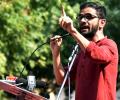
The Supreme Court has reaffirmed that bail is the general rule, even in cases registered under the Unlawful Activities (Prevention) Act (UAPA), while granting bail to an accused in a narco-terror case.
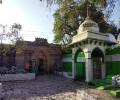
The Madhya Pradesh government has challenged the legal validity of a 1935 order from the former Dhar princely state concerning the religious status of the Bhojshala Temple-Kamal Maula Mosque, arguing it cannot be considered law.

The All India Football Federation (AIFF) will hold a Special General Body Meeting to amend its constitution in line with the National Sports Governance Act and discuss the new commercial partner for the Indian Super League.

Bar Council of India (BCI) Chairman Manan Kumar Mishra has issued an apology to law students, particularly those from NALSAR, for any hurt caused by the recent controversy surrounding their convocation and enrolment, urging them to make independent decisions.
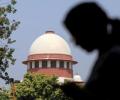
The Supreme Court of India has upheld the Election Commission's documentation framework for the Special Intensive Revision of electoral rolls, affirming the commission's authority and stating that Aadhaar is not proof of citizenship.
The Supreme Court granted interim bail to two Delhi riots accused, while addressing concerns about conflicting views on bail under the Unlawful Activities Prevention Act (UAPA). The court referred the question of law on whether prolonged incarceration can override UAPA restrictions to a larger bench.

Harish Rana, the first person in India to be granted passive euthanasia, has died at AIIMS-Delhi after being in a coma for over 13 years. His case led to a landmark Supreme Court judgment allowing passive euthanasia and sparked discussions about the right to die with dignity in India.

'The order has no practical effect unless and until he chooses to enter Singapore.'

The Supreme Court of India has allowed passive euthanasia for a 32-year-old man who has been in a permanent vegetative state since 2013, highlighting the legal and ethical considerations surrounding the right to die with dignity.
'After each election the losers troop to the court with various objections. The general election will not be different.' 'It could be worse if there is no clear majority and the President has to invite the party with the largest number to form the government,' points out M J Antony.

The pleas challenging SIR claimed that the Election Commission does not have powers under Article 326 of the Constitution, the Representation of the People Act, 1950 and the Rules made under it to carry out SIR in a larger form.

The Calcutta High Court has upheld a magistrate court's decision to grant interim maintenance to a Hindu woman who married a man according to Muslim rites and customs, citing Supreme Court precedents on the husband's liability for maintenance until the marriage is declared void.

The Supreme Court of India has voiced concerns about the potential consequences of individuals questioning religious practices in constitutional courts, warning it could lead to the fragmentation of religions and civilisation. A nine-judge Constitution bench is hearing petitions related to discrimination against women at religious places and the scope of religious freedom.
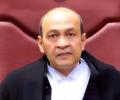
The Judges Inquiry Committee, formed to investigate allegations against Justice Yashwant Varma, has submitted its report to the Lok Sabha Speaker. The report, concerning allegations that led to impeachment proceedings, will be presented before both Houses of Parliament.

Justice A M Khanwilkar, the second senior-most judge of the Supreme Court, retired on Friday and thanked bar association leaders for their 'love and affection'.

'Courts are not moved by spectacle. They act when the facts, as they stand, call for the law to step in.'
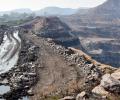
The Environment Ministry's expert appraisal committee (EAC) has cleared the expansion of the Magadh opencast coal mine in Jharkhand, operated by Central Coalfields Limited, despite pending court cases regarding alleged encroachment of forest land.
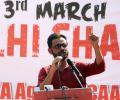
The Supreme Court has dismissed activist Umar Khalid's plea seeking a review of a verdict denying him bail in connection with the 2020 Delhi riots conspiracy case.

Pakistan's media regulatory authority, PEMRA, has issued a show-cause notice to GeoNews for allegedly violating a ban on Indian content by airing Indian songs and visuals while reporting on the death of legendary singer Asha Bhosle.
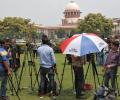
Security has been put on high alert across the nation as the Supreme Court of India is all set to deliver its verdict in the Ram Janambhoomi-Babri Masjid dispute, Sabarimala case and a host of other legal wrangles.

'Unfortunately, the judges chose not to address the issue of whether Hindutva is an appeal to religion.' 'From the moment the judgment is delivered, it is the law of the land.'
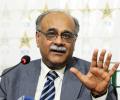
The Supreme Court on Wednesday restored Najam Sethi as chairman of the Pakistan Cricket Board just four days after the Islamabad high court reinstated his predecessor, Zaka Ashraf, as head of the organisation.
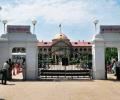
The Allahabad High Court has ruled that the Places of Worship (Special Provisions) Act, 1991, prohibits only the conversion of religious character but does not prevent the state from acquiring such properties for secular and public purposes. This observation came while dismissing a petition challenging the widening and beautification of the Dalmandi area in Varanasi for the Shri Kashi Vishwanath Dham corridor, which involved the proposed demolition of six ancient mosques.

Tamil Nadu Chief Minister C Joseph Vijay is set to introduce a resolution in the state Assembly opposing Karnataka's plan to construct a dam across the Cauvery river at Mekedatu. The resolution will urge the Centre to withhold technical and environmental clearance, citing concerns that the project would unilaterally affect Tamil Nadu's interests.

The Supreme Court of India has stated that religious institutions must have structure and norms for their functioning, emphasising that the right to manage a religious institution does not imply an absence of order.
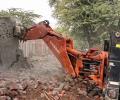
'Even as the Supreme Court's anti-punitive demolition judgment nears its first anniversary, no formal contempt proceedings have been initiated either by the Supreme Court or any high court against officers or demolition squads who have acted in violation of it.'

The Chhattisgarh High Court has overturned the acquittal of Amit Jogi, son of former Chief Minister Ajit Jogi, and sentenced him to life imprisonment for the 2003 murder of NCP leader Ramavatar Jaggi.

'Of course, I would like a world in which candidates don't ask for my vote on religious (etc) grounds.' 'But will we ever live in a world free of such appeals?' 'More important, will a Supreme Court verdict, by itself, ever deliver such a world?' asks Dilip D'Souza.

The Supreme Court of India has emphasised the importance of open access to all temples and 'maths' for everyone, warning that excluding any denomination would negatively impact Hinduism and divide society. This statement was made during hearings on petitions related to discrimination against women at religious sites and the scope of religious freedom.
The Supreme Court of India is hearing petitions related to discrimination against women at religious places, including the Sabarimala temple in Kerala, and the scope of religious freedom practised by multiple faiths.

The Madhya Pradesh High Court referenced the Supreme Court's Ayodhya verdict principles while ruling on the Bhojshala-Kamal Maula mosque complex case, determining the site to be a temple dedicated to Goddess Saraswati.

The Supreme Court of India has permitted euthanasia for rabid, incurably ill, or demonstrably dangerous stray dogs to mitigate the threat to human life. The ruling includes several directives to manage the rising stray dog population, emphasising public safety and animal welfare.
'It is time to acknowledge that the benefits of globalisation have remained in the privileged hands of a few, for whom the world begins and ends with fashion, Bollywood and cricket.'
The Supreme Court has stated that roads cannot be blocked for religious activities and that while religious denominations have autonomy in worship, the government can interfere if secular activities are affected.

The Supreme Court of India has affirmed that the right to live with dignity includes the right to live without the threat of harm from stray dogs, dismissing petitions seeking to overturn earlier directives on relocation and sterilisation.
The Bombay High Court has upheld the acquittal of 22 accused in the 2005 alleged fake encounter case of gangster Sohrabuddin Shaikh, his wife Kausar Bi, and aide Tulsiram Prajapati, dismissing appeals filed by Shaikh's brothers.
The Allahabad High Court dismissed a woman's habeas corpus petition seeking custody of her children from her estranged husband, stating that a father is a natural guardian and cannot be accused of illegal detention unless violating a court order.
